
Organisation for Research and Publications

Independent research into civilisation, social change, institutions and the social power of ideas
Open Civitas is an independent organisation for social-scientific research and publication. Its central field of interest is the formation, persistence and transformation of societies: how people develop and share conceptions of reality, norms and values, patterns of behaviour, goals and ideals; how these become embedded in social relations and institutions; and how they change over time.
The research programme takes a psychosociological approach to social change. It studies the interaction between individuals and the social circles in which they live and act, and the processes through which ideas are transmitted, internalised, institutionalised, reproduced and contested.
A major intellectual point of reference is the work of Norbert Elias, particularly his analysis of civilising processes and the interdependence between individual formation and changing social structures. Open Civitas does not seek to reproduce Elias’s theory, but continues the underlying research problem: how can long-term social change be explained by investigating the reciprocal relations between individuals, social relations, institutions and historically developing patterns of thought and conduct?
The purpose is explanatory rather than normative. Research should help us understand how societies change, without presupposing which political, moral or ideological outcome ought to prevail.
Research
Understanding civilisation and social change
Research conducted within Open Civitas focuses on the psychosociological mechanisms underlying social stability and social change.
Individuals do not enter society as fully formed and autonomous actors. From birth onwards they acquire conceptions about reality, norms and values, behavioural repertoires, goals and ideals through interaction with other people, organisations, institutions, media and increasingly also technological information systems. At the same time, individuals are not merely passive products of their social environment. They interpret, select, modify, reject and transmit what they encounter.
This continuous interaction between individual formation and the social environment is central to the research programme.
Particular attention is given to questions such as how ideas spread between individuals and social groups; why some ideas become socially dominant while others disappear; how shared ideas become embedded in institutions; how institutions contribute to the reproduction and legitimation of existing social arrangements; how social power develops from institutionalised ideas; why established social orders may remain stable even when individuals increasingly question them; and under what conditions social and political change becomes possible.
The research is deliberately not restricted to politics or the state. The same mechanisms can be studied within families, associations, businesses, universities, movements, religious communities, political organisations and states.
This provides the basis for a more general scientific theory of civilising and social change.
Publications
From theoretical research to testable propositions
Open Civitas publishes research papers, theoretical studies and essays arising from its research programme.
The central project currently being developed is The Art of Revolution: A Formal Scientific Theory of Social Change.
The theory investigates how personal civilisations and shared social civilisations arise and change; how ideas are transmitted and internalised; how shared ideas become institutionalised; how institutions acquire and reproduce social power; how elites, movements and political actors operate within existing social arrangements; and how purposive attempts at social change interact with processes that no actor fully controls.
The formal version of The Art of Revolution consists of axioms, explicitly defined concepts and a logically organised set of propositions intended to make the theory open to empirical investigation, criticism and falsification. Its purpose is not to provide a political programme or a manual for revolution. It seeks to explain the mechanisms through which social orders emerge, persist and change.
A related line of research concerns the pathologisation of political dissent. This research examines a particular mechanism of social sanctioning: situations in which dissenting ideas or behaviour are no longer primarily evaluated on their substantive content, but are interpreted as evidence of a cognitive, moral, psychological or social deficiency of the person expressing them.
Publications on these and related subjects will be presented here with abstracts, publication details and links to the full papers or research documents.
Author
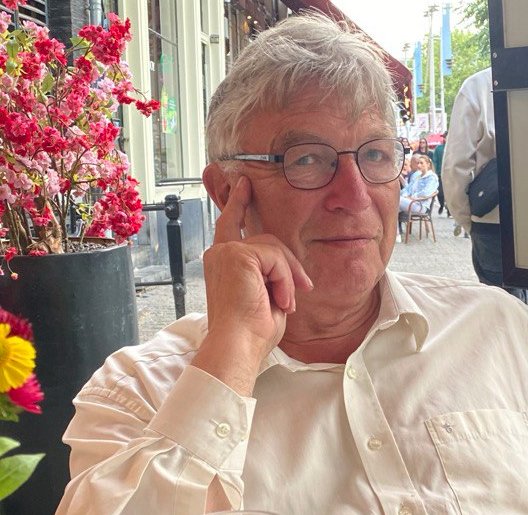
Dick H. Ahles
Dick H. Ahles is an independent researcher in political science, political philosophy and the study of social change.
He studied political science at the Vrije Universiteit Amsterdam, with particular attention to political theory, methodology and the empirical study of social and political phenomena. After his academic studies he pursued a professional career in publishing, media, management and digital information services.
His current research returns to questions that originally motivated his study of political science: how social orders arise, why people regard particular institutions and ideas as legitimate, how ideas acquire social power, why societies sometimes remain remarkably stable, and how fundamental social change becomes possible.
His research combines insights from political science, sociology, social psychology and political philosophy. Important intellectual reference points include Norbert Elias’s theory of civilising processes, Karl Popper’s philosophy of science and his defence of the open society, and research into institutions, power, socialisation and social change.
Ahles is the author of The Art of Revolution: A Formal Scientific Theory of Social Change and related studies within the Open Civitas research programme.
About Open Civitas
Research requires an open society
The name Open Civitas refers to a simple but fundamental idea: serious scientific inquiry and an open society depend upon each other.
The concept is inspired in particular by Karl Popper’s defence of the open society and of critical rationalism. Knowledge advances not because particular persons, institutions or doctrines possess final truth, but because propositions can be examined, criticised and, where necessary, rejected or improved.
Open Civitas therefore regards scientific theories as provisional explanations rather than doctrines to be defended. A theory should formulate its concepts and propositions sufficiently clearly to make criticism possible. Where empirical evidence contradicts a proposition, the appropriate response is not to protect the theory from criticism but to investigate whether it must be modified or abandoned.
The same openness is important beyond science. Citizens can participate meaningfully in society only when competing explanations, values and political proposals can be articulated, examined and challenged. An open society therefore requires more than formal political institutions. It requires intellectual space for disagreement, criticism and the examination of established assumptions.
Open Civitas does not promote a political party, ideology or programme. Its research may examine political ideas, movements, institutions and conflicts, but its scientific task is analytical: to describe and explain the mechanisms through which ideas and social arrangements arise, acquire legitimacy and power, reproduce themselves and change.
Its publications are intended to contribute to that process by making research publicly accessible and open to criticism.
Contact
Open Civitas
Organisation for Research and Publications
Dick H. Ahles
Independent Researcher
Enkhuizen, The Netherlands
Email: open-civitas@proton.me
Research enquiries, academic correspondence and comments on publications are welcome.